
In partnership with

POSTING & TOASTING
Every show should be a podcast. But not every podcast should be a show.
I’ve been saying this a lot lately. The framing sounds like it's about formats. But it's really about what "access" means now, who gets to grant it, and why the answer has everything to do with how power moves through a fragmented media landscape.
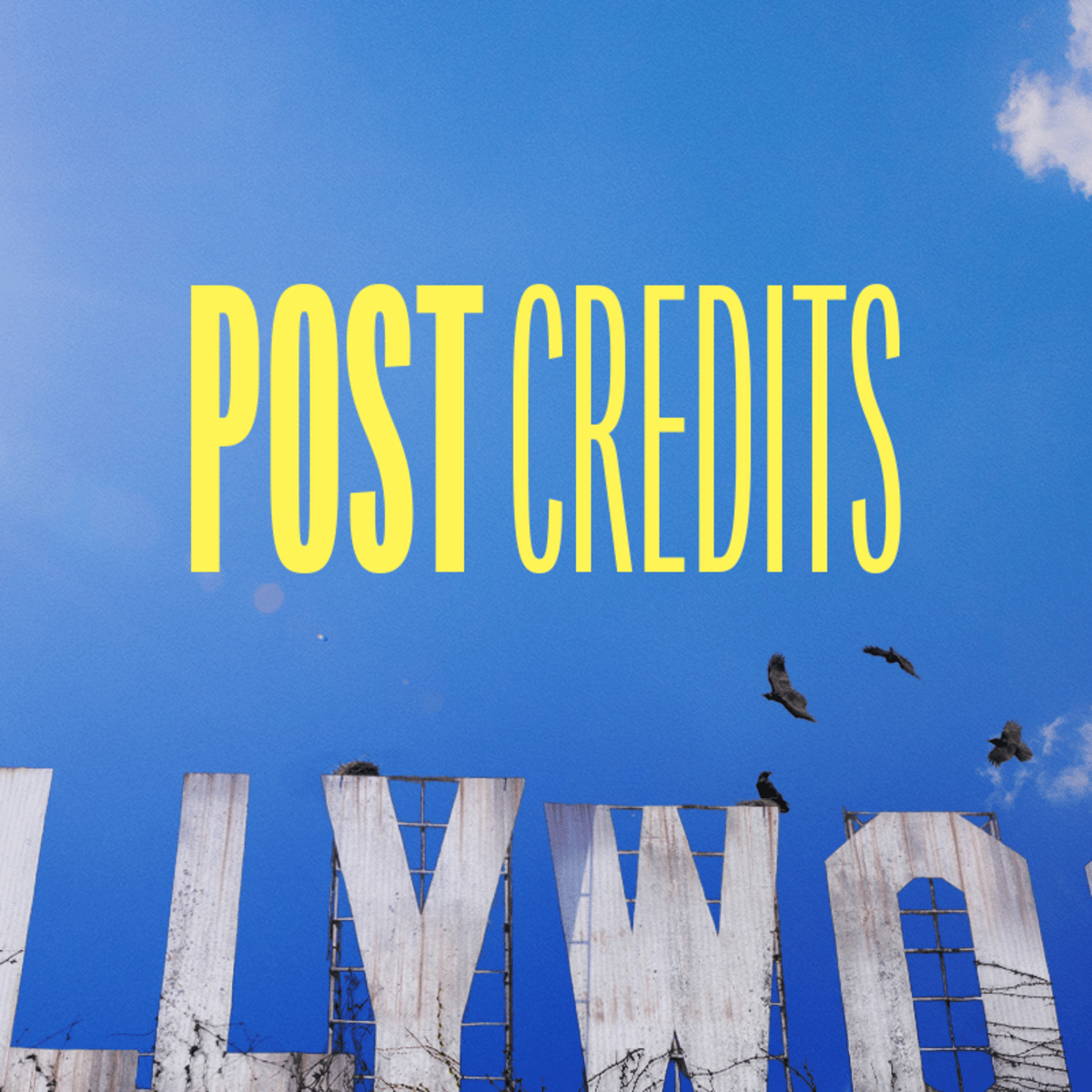
Not only did last night’s Oscars end with a self-referential post credits(!) sequence that may reveal just how much it feels threatened by creators (you'll have to watch or spoil One Battle After Another to really get the reference), but last week, NBCUniversal announced it's shutting down its entire first-run syndication operation — Access Hollywood, Karamo, Steve Wilkos, all of it.
The official reason was that local stations are programming differently now. But the more telling detail is in the name of the show leading the obituary. Access Hollywood was built on a specific idea of access: the credential, the velvet rope, the institutional permission slip. NBC's affiliate relationships got cameras onto red carpets. The network's name got celebrities on the phone. Access was something granted by an institution, and institutions were the only ones who could grant it.
That idea of access is what died this week. Not just the show.
What replaced it doesn't look like television, and it doesn't look like any single thing. It looks like Call Her Daddy signing a $125 million deal with SiriusXM. It looks like SmartLess selling out arenas. It looks like a 28-year-old on YouTube getting a sit-down with an A-list celebrity because she has a more engaged audience than any syndicated entertainment show still on air. The credential is the audience now. And audiences aren't built through affiliates — they're built through relationships, assembled piece by piece across every platform, feed, and group chat where the creator shows up consistently and honestly.
This is the part that television never fully reckoned with: distribution changed before the business model did.
Syndication was, in its original form, a genuinely decentralized idea. The whole point was getting a show onto 200 local stations instead of routing everything through one network. Spread the signal, expand the reach, let local markets do what local markets do. For decades, that model worked. But it calcified. The distribution was decentralized in form; the leverage stayed centralized in practice. You still needed NBCU to produce the show, to hold the affiliate relationships, to be the entity that mattered. The 200 stations were just pipes. When the pipes became less valuable than the relationship at the other end of them, the model had nothing left.
The new distribution model is decentralized all the way down — and that's not a bug, it's the entire architecture. A podcast feed lives on Spotify and Apple and YouTube and a creator's own website simultaneously, without anyone's permission. A creator's audience lives on Instagram and TikTok and Discord and in someone's earbuds on a Tuesday morning commute and in a newsletter that lands directly in an inbox. No single platform owns the relationship. No single gatekeeper can revoke the credential. The audience is the credential, and it travels with the creator wherever they go.
This is why the podcast format became the template for what modern media actually looks like, even when it's not technically a podcast. The format's genius was never really about audio. It was about building a direct, portable, platform-agnostic relationship with an audience — one that could survive any single distribution deal going away, any algorithm change, any affiliate station deciding to run local news instead. The best podcast creators didn't think about distribution as a destination. They thought about it as weather: something to navigate, not something to depend on.
Television — particularly the kind of institutional, credential-dependent television that Access Hollywood represented — was built on the opposite assumption. Distribution was destiny. Get on NBC's syndication network and you had reach. Get the reach and you had access. Get the access and you had the show. The whole chain ran in one direction, from the institution outward. When the institution's leverage over distribution weakened, everything downstream weakened with it.
The reason the "not every podcast should be a show" half of this argument matters is subtler. When you take something built on intimacy and run it through a production machine — writers rooms, network notes, episode orders, a single platform's release strategy — you're not just changing the format. You're changing the relationship. You're introducing distance between the creator and the audience at exactly the moment when closeness was the whole product. The result tends to be something more expensive and less true, with all of its distribution risk concentrated in exactly the place the original format had learned to avoid.
The shows that will matter in five years are the ones being built right now with this architecture in mind: a host or creator with a direct relationship to an audience, distributed across enough surfaces that no single platform's decisions are existential, monetized in ways that don't require a gatekeeper's approval. Some of them will look like podcasts. Some will look like YouTube channels or Substacks or live events or all of the above at once. The format is almost beside the point. The structure is everything.
Thirty years ago, Access Hollywood was a genuinely powerful idea. Get close to the machinery of celebrity, bring the audience along, let them feel like they're inside something. But the machinery was never what people were after. They wanted to feel like they were part of something — and "part of something" turns out to require a very different set of ingredients than a network affiliation and a red carpet credential.
Authenticity is what gets a creator in the room today. It's what makes a cold call get returned, what makes an audience show up for the first episode, what makes a celebrity want to sit across from someone who doesn't need a logo behind them to command attention. But authenticity alone doesn't build anything that lasts. What lasts is community — the audience that doesn't just consume but identifies, that shows up not because an algorithm served them something but because they belong to something. That's the asset that no syndication deal can create and no cancellation can take away.
The question worth asking now: are you building genuine community, or just accumulating viewers? For advertisers, that distinction is becoming the only one that matters — views are a commodity, but real engagement is scarce, and scarce is where the pricing power lives.
— Ian
A note on what this is all about.
I spend most of my time at the intersection of where entertainment is going and where brands and creators are trying to get ahead of it; I'm fortunate enough to have seen a few cycles. POST CREDITS is where I think out loud about the power shifts, the deals, the platform moves, the cultural signals that most people notice too late.
Here’s where I manage your expectations: I publish when I have something worth saying. That's usually once a week, sometimes twice when the news moves fast. No filler. If this lands in your inbox, it's because I think it's worth your time.
If you're a CMO, a creator, a platform leader, or someone who invests in any of the above, you're exactly who I'm writing this for.
Welcome.
— Ian
FOR YOUR CONSIDERATION
The Oscars Staffed Their Biggest Night With Creators — Because That's Who Audiences Want
Access? Hollywood. Now in her third year as the Academy's official social media ambassador, Amelia Dimoldenberg — creator of Chicken Shop Date — is the Oscars' official red carpet correspondent tonight. Joining her: Quenlin Blackwell, Brittany Broski, and Jake Shane, all presenting live from the red carpet. The institution isn't just moving to YouTube in 2029 — it's already staffing its most visible moments with creators because that's who audiences actually want to watch.[HuffPo]
Netflix's Video Podcast Exclusivity Deal Is Costing Creators Half Their YouTube Audience
Video podcasts that exist exclusively on Netflix have seen their YouTube growth decline by as much as 50%, according to Bloomberg. The culprit: Netflix deals restrict how many clips podcasters can post to third-party platforms. Creators are trading distributed reach for a centralized check — and their audience is paying the price. [Deadline]
Spotter's "Creator TV" Showcase Is the New Upfronts — and 150 CMOs Showed Up
Spotter held its second annual Showcase in New York on March 4, pitching the concept of "Creator TV" — long-form, episodic creator programming — directly to brand and agency executives as an alternative to the traditional TV upfronts. Creators like Dude Perfect, Kinigra Deon, and Airrack made the case that fandom and repeat viewership, not raw reach, are the metrics that matter. [Tubefilter]
Jay Shetty Is Leaving iHeartMedia
After a three-year deal expired and the two sides couldn't agree on renewal terms, Jay Shetty — 800+ episodes, guests including Michelle Obama, Oprah, and Selena Gomez — is parting ways with iHeartMedia. He's already launched Perfect Strangers Media and closed two deals with Netflix. The institution needed him more than he needed it. [Variety]
Netflix's $2.8 Billion Windfall Should Go Into the Creator Economy
Zach Katz, CEO of creator management company Fixated, told TheWrap that Hollywood "has never taken its eye off" the creator economy, and that studios know creators are "its survival" — predicting significant investment in creators over the next two years alongside, in his words, "a lot of errors." [TheWrap]
The most honest sentence a studio-adjacent person said in public this week wasn't in any merger press release. Katz said the quiet part out loud: Hollywood isn't leading this. It's chasing.
Feel like you’re more informed about the evolution of entertainment? Share this with your friends and colleagues, and you’ll get 1000 bonus points.
Until next week,
Ian Schafer, Ensemble, and the POST CREDITS team.
The Future of AI in Marketing. Your Shortcut to Smarter, Faster Marketing.

Unlock a focused set of AI strategies built to streamline your work and maximize impact. This guide delivers the practical tactics and tools marketers need to start seeing results right away:
7 high-impact AI strategies to accelerate your marketing performance
Practical use cases for content creation, lead gen, and personalization
Expert insights into how top marketers are using AI today
A framework to evaluate and implement AI tools efficiently
Stay ahead of the curve with these top strategies AI helped develop for marketers, built for real-world results.